BIM Coordination in Project Teams, Altogether


The construction projects in today’s scenario are increasing day by day, followed by a lot of complications. So the multi-disciplinary team can’t work separately. There are different professions in a construction project team, like structural engineers, architects, contractors, project managers, MEP consultants, and so on, all of whom have to work together as one team on any upcoming projects. BIM coordination needs to be implied.
For this mission to be successful, they have to -
Share data so all work from the same data
Aligned workflow so that the tasks are accordingly planned and executed in the right way
Clear communication with each other so that there are no mistakes and misunderstandings.
So, overall good coordination between these teams has become important for a successful construction project.
This is where BIM coordination comes in. It allows the teams to spot and fix problems or errors early, plan work together, and even collaborate in real time. Thus, complicated projects are completed on time, with better precision and less rework.
This article dives into advanced BIM coordination strategies, especially designed for multi-disciplinary projects. And to learn more about the seamless team collaboration, or model integration, you can explore PrimaVerse BIM Services.
What Is BIM Coordination?
Building Information Modeling (BIM) coordination is the procedure where 3D models are integrated from a lot of different disciplines, such as architectural, structural, and MEP designs, into a coordinated environment.
The intent here is to identify the different kinds of conflicts, improve constructability, and ensure that all of the systems work together before construction begins.
Main Elements of BIM Coordination
Federated models merging multiple disciplines
Consistent modeling standards and naming conventions
Planned coordination and clash review sessions
Centralized data sharing and version control
Unlike traditional coordination methods, BIM coordination is proactive rather than reactive, reducing costly design changes during construction. As per the industry studies, early coordination significantly improves project predictability and quality.

Importance of Different Teams Working on a Construction Project together
In any construction project, there are varied teams with different kind of purpose to their workflow. Even their way of working and tools used are different.
For instance, MEP consultants, structural engineers and architects might use different software, and follow different workflow, because of which, they need to be aligned every time with each other during the project.
Problems When Teams Don’t Coordinate Well
So, if there’s no proper BIM coordination in between them to manage such alignment, there’s a high risk of projects getting issues like:
Because of miscommunication, there would be delays
If there’s a point where teams work with outdated or incorrect details, there would be errors
With design changes and rework, it would be inviting higher costs
BIM Coordination Advantages in Multi-Disciplinary Projects
Improved communication across teams
Faster decision-making using shared visual data
Reduced construction conflicts
Higher project transparency and accountability
Research by the Project Management Institute emphasizes that coordinated communication across disciplines directly impacts schedule performance and quality outcomes in complex projects.
BIM Coordination Tools & Software
In BIM coordination, technology plays a significant role. Without the right digital tools and software, it’s not easy for different teams to work efficiently with each other.
With the right BIM tools, teams can:
When working from different locations, collaborate seamlessly
Everyone can use the latest details by sharing and updating the data accurately
Reduce errors and confusion by efficiently managing the coordination workflow.
Commonly Used BIM Coordination Tools
Tool Category | Purpose |
Authoring Tools | Model creation for each discipline |
Coordination Platforms | Model federation and clash detection |
Cloud Collaboration Tools | Real-time access and version control |
Issue Tracking Software | Assigning and resolving coordination issues |
Role of MEP BIM in Coordination
MEP BIM is often the most coordination-intensive discipline due to dense system layouts. Accurate MEP BIM models allow teams to:
Optimize routing within limited spaces
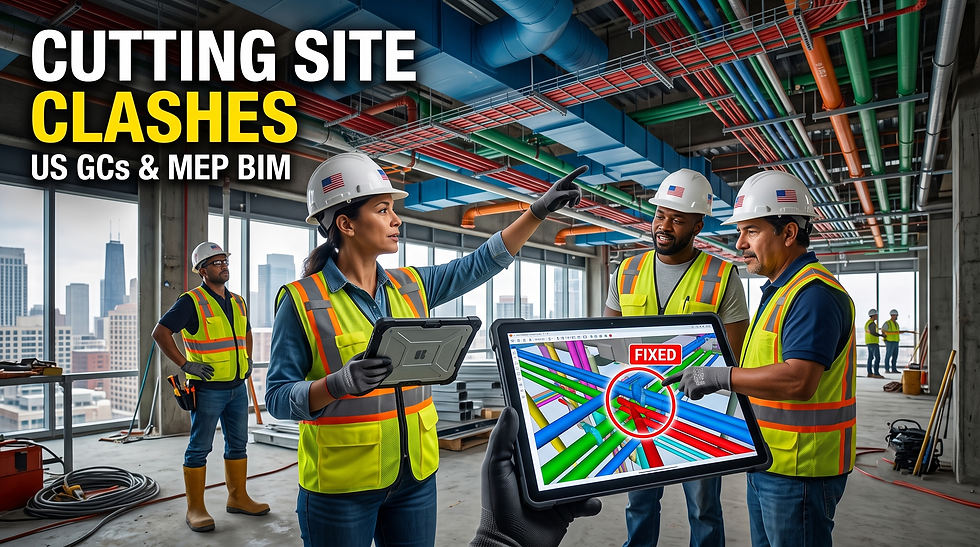
Avoid clashes with structural and architectural elements
Improve installation sequencing
For both architects and engineers together, BIM coordination platforms offer a shared platform to review, comment, and resolve issues collaboratively, improving building information modeling collaboration.

Clash Detection: The Main Step in BIM Coordination
Clash detection is known as one of the most significant BIM coordination parts. It is the process of finding conflicts between different building elements, such as a pipe passing through a beam, before construction starts. To work the right way, clash detection must follow a clear and repeatable process, not random checks.
Step-by-Step Clash Detection Process
1. Model Preparation
Ensure discipline models follow agreed standards and LOD requirements.
2. Model Federation
Combined model of MEP data, structural and architectural: makes it easy to see how all of the systems depend on each other.
3. Clash Detection Execution
Run rule-based clash tests based on project priorities.
4. Clash Review Meetings
Conduct coordination sessions to review and prioritize clashes.
5. Issue Assignment & Resolution
Assign clashes to responsible teams and track closure.
6. Model Updates & Revalidation
Re-run clash detection after updates to ensure resolution.
Types of Clashes Identified
Hard clashes (physical overlaps)
Soft clashes (clearance issues)
Workflow clashes (sequencing conflicts)
Studies show that structured clash detection can reduce rework by up to 70%, significantly improving project efficiency.
How Project Teams Work Better Together
Decide on the roles initially, so that every team member knows what their responsibilities are from the very start of the project
One needs to agree on the BIM plan, which explains how the models, the workflow, and the data would be managed
There needs to be frequent meetings for discussion of progress, issues need to be resolved, and everybody has to be aligned
One can use the visual dashboards to track any issues that are raised easily, and see which work is pending, resolved or needs immediate attentionResearch shows the importance of coordinated communication across teams to deliver complex projects.
BIM for Architects: Coordination Leadership
Architects often act as coordination leaders, ensuring spatial integrity and design intent across disciplines. Using BIM for architects enables:
Early design validation
Faster design iterations
Better alignment with engineering constraints
Cloud-based coordination platforms further enhance collaboration by allowing distributed teams to work in sync, as highlighted by industry best practices. To know what BIM coordination means in practice can help teams improve with early conflict discovery.
ROI Analysis of BIM Coordination
With investment in BIM coordination, one can achieve measurable financial and operational returns across the project lifecycle.
Cost Savings and Efficiency Gains
Area | Impact |
Clash Reduction | Lower rework costs |
Schedule Optimization | Faster project delivery |
Material Efficiency | Reduced wastage |
Risk Mitigation | Fewer change orders |
According to published engineering studies, coordinated BIM workflows can generate significant cost savings by identifying constructability issues early in the design phase.
Long-Term Value
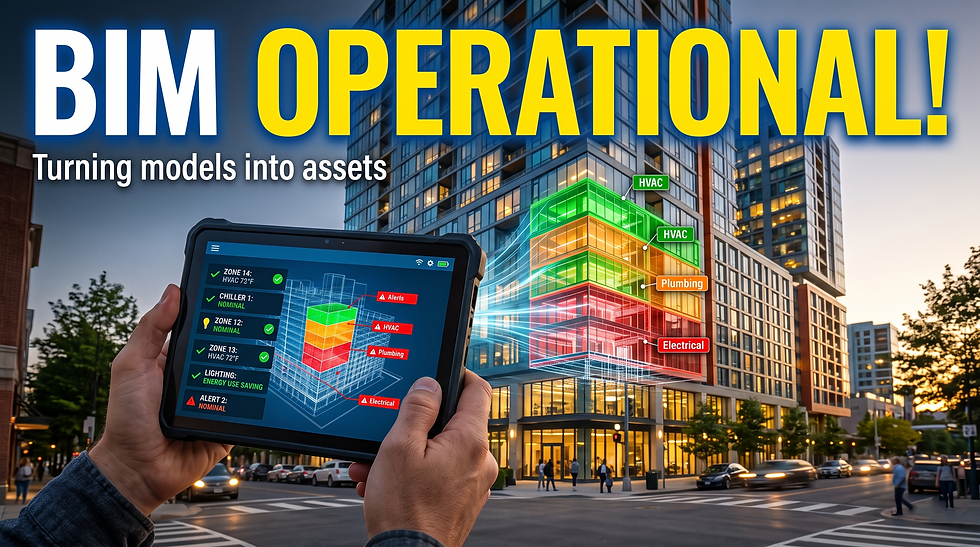
Beyond construction, coordinated BIM models support:
Facility management and operations
Renovation and retrofit planning
Asset lifecycle optimization
This makes BIM coordination a strategic investment rather than a short-term expense.
Comparison: Traditional Coordination vs BIM Coordination
Aspect | Traditional Coordination | BIM Coordination |
Communication | Fragmented | Centralized |
Conflict Detection | On-site | Design-stage |
Data Accuracy | Drawing-based | Model-based |
Change Management | Reactive | Proactive |
Collaboration | Siloed | Integrated |
How PrimaVerse Supports Advanced BIM Coordination
PrimaVerse offers BIM coordination services which are specifically designed for handling of large and complicated construction projects, where a lot of different teams, like MEP consultants, engineers and architects are actively involved.
You can explore our BIM services to understand how we, in PrimaVerse, help our project teams to work together in a better way, reduce any risk, and complete these projects far better in a smooth manner.
Get connected to our BIM expert team at Primaverse for more details.

Conclusion
For projects having a lot of team, good BIM coordination is no longer a “nice to have”, it’s a basic need. Team works much better with each other with the conception of BIM coordination, wherein they can spot issues early, and avoid problems later on site.
When the engineers, MEP team and architects, altogether work on the same project, clear BIM collaboration keeps everyone on toes working on the same page. The right tools and a simple workflow helps the teams to seamlessly collaborate and get the job done right the first time.
FAQs
1. In construction, what is BIM coordination?
A procedure where there’s integration of models from multiple disciplines is possible with BIM coordination. With its help, teams can find possible issues early and improve how they work together before site work starts.
2. Why is BIM coordination essential for multi-disciplinary projects?
The quality and efficiency of the project improve, clashes are reduced, and there’s team alignment.
3. How does MEP BIM support coordination?
Complex system layouts get managed, spatial conflicts are reduced, and issues of installation are even managed by MEP BIM.
4. BIM coordination uses which tools?
Commonly used tools are coordination platforms, clash detection tools, cloud collaboration systems, and issue tracking software.
5. When should BIM coordination start?
For peak impact, BIM coordination must begin early in the design phase.
6. Who leads the BIM coordination process?
BIM managers coordinate, and architects play a key role.
7. How often should clash detection be performed?
Clash detection should be performed at key design milestones and after major model updates.
8. Is BIM coordination expensive?
Though there’s a need for upfront investment, BIM coordination presents a strong ROI through delays and reduced rework.
9. How does BIM coordination improve collaboration?
It provides a shared, visual environment that improves communication and accountability.
10. Can BIM coordination support facility management?
Affirmative. Coordinated BIM models are valuable for future upgrades, maintenance, and operations.



Comments