Applications of BIM for Sustainable Design: “Green” Building Design


In the present scenario, sustainability has emerged as an integral agenda in the AEC industry, and BIM for sustainable design has become one of the most influential tools pushing toward high-performing, energy-saving, sustainable developments. This blog gives you an idea of how BIM transforms green building workflows, how project teams use it to deliver measurable environmental and economic benefits, and how it supports LEED targets.
Introduction: Why Sustainable Design Matters Today
As the challenges posed by climate change intensify, architects, engineers, and contractors are sometimes forced to resort to eco-friendly methods for minimizing carbon footprint, optimizing resource usage, and enhancing energy efficiency. The traditional methods have some deficiencies because of scattered information and discrepancies.
It's here that green building BIM truly shines-with an integrated data platform, a precisely modeled simulation space, and early-stage performance assessments. As a case-study-centric introduction, let's discuss some project experiences with sustainable construction BIM and how it helped teams design smarter, build greener, and achieve measurable sustainability outcomes.
Sustainable Design Goals: How BIM Supports It
1. Early Energy Modeling and Performance Simulation
As a very valuable energy modeling BIM feature, it enables modeling of energy loads at a conceptual stage. Rather than estimating energy performance later in the design process, BIM tools allow the teams to analyze:
Solar heat gain
Daylight distribution
HVAC loads
Thermal comfort
Envelope performance
Natural ventilation patterns
Shading device effectiveness
With such early visibility, it helps optimize form, façade, glazing ratio, orientation, and material options. Projects that use energy modeling BIM usually reduce energy consumption by 15-25% even before beginning the project.
Energy modeling best practices reference the U.S. Department of Energy Building Technologies Office.
2. Material Optimization and Selection of Low-Carbon
Buildings generate a large portion of global CO₂ emissions during material extraction, production, and transportation. By applying BIM, project teams can evaluate:
Embodied carbon
Material durability
Recycling potential
Reuse feasibility
Life-cycle impact
It informs choices on low-carbon materials-steel versus timber, recycled aggregates, high-performance insulation, and energy-saving glazing. With BIM for sustainable design, architects are also able to plot material volumes with great accuracy, resulting in 10-20% waste reduction.
Material sustainability guidelines often reference the International Living Future Institute.
3. Solar & Daylight Optimization
Solar analysis within BIM helps determine:
Optimal building orientation
Correct shading depth
Window-to-wall ratio
Glare control
Passive lighting strategies
In one specific commercial office case study, solar modeling helped reduce 30% artificial lighting demand. These simulations are central to sustainable design technology, improving operational efficiency while keeping occupants comfortable.
Solar and daylight simulation method is mostly based on research recommendations from NREL (National Renewable Energy Laboratory)
4. BIM for LEED Certification & Documentation
A LEED Certification is a lengthy, complicated procedure with complex paperwork, data verification, and reporting. BIM makes it easier since it assists in:
Automated tracking of the materials
Energy model integration
Construction waste quantification
Water use analysis
Indoor environmental quality simulations
Equipment efficiency data
As-built model documentation
Using LEED integration with BIM, teams can save up to 40 percent on documentation time. BIM itself can forecast probable credits so that there can be an adjustment in strategy instead.
LEED guidelines: LEED guidelines refer to the U.S. Green Building Council (USGBC)

5. Water Efficiency and Plumbing System Optimization
Water conservation is a major component of any sustainability strategy. BIM enables simulation of:
Greywater recycling systems
Low-flow fixtures
Rainwater harvesting volumes
Irrigation requirements
Pump optimization
Wastewater treatment layouts
It is possible for the designers to analyze and optimize different methods of water conservation by using sustainable construction BIM.
Water efficiency standards can be obtained with the help of resources in the EPA WaterSense Program.
6. HVAC Optimization and Mechanical Efficiency
BIM tools allow engineers to analyze energy consumption and redesign the energy systems for better efficiency. BIM optimization emphasizes:
Correct sizing of HVAC
Peak load reduction
Increased thermal insulation
Mechanical zoning efficiency
Duct routing with low friction
Heat recovery systems
This directly supports building energy efficiency, improving operational sustainability, and lowering lifecycle costs.
Case Study: BIM-Driven Sustainable Design for a Green Office Tower
For a better understanding of the impact of BIM for sustainable design, let's see the implementation project type: an office tower with 25 stories and LEED Gold certification.
Project Goals
Reduce energy consumption by 30%
Optimize material usage
Improve indoor environmental quality.
Minimize lifecycle carbon emissions.
Achieve LEED certification with minimal redesign efforts.
Key BIM Applications
1. Energy Modeling BIM Reduced HVAC Load by 18%
Using BIM-based simulation, different combinations of facade solutions were tested by the design team. The high-performance double-glazing facade solution with optimized shading provided a drastic reduction in demands for heating and cooling.
2. Green Building BIM Tools Lowered Material Waste by 22%
Accurate quantity take-offs eliminated over-ordering and unnecessary site waste, which fit perfectly with green construction practices.
3. Solar Analysis Improved Daylight Usage by 35%
This allowed lighting automation systems to work more efficiently, reducing electricity consumption dramatically.
4. Integration of LEED with BIM Reduced Documentation Time by 45%
Automatic data extraction from BIM made credit submissions and verifications easier.
5. Water Modeling resulted in an 18% reduction of water consumption per year
Greywater and rainwater models helped determine the ideal tank size and filtration systems.
Overall, it achieved an energy savings value of 32%, which was beyond the targeted goals. This is an excellent example of sustainable construction BIM, directly improving the performance outcomes.
BIM for Sustainability During Construction
1. Carbon Output Reduced by Construction Sequencing
4D BIM helped plan the delivery of materials and reduce idling times for machinery, thereby reducing fuel consumption and resulting in emissions on-site.
2. Prefabrication Strategies - Waste Reduction
BIM allowed prefabricated façade panels and MEP modules to be designed precisely and installed with fewer errors.
3. Smart Site Logistics
BIM supported:
Efficient material transport
Reuse of temporary structures
Proper construction phasing
These steps align with sustainable design technology and contribute to greener construction activity.

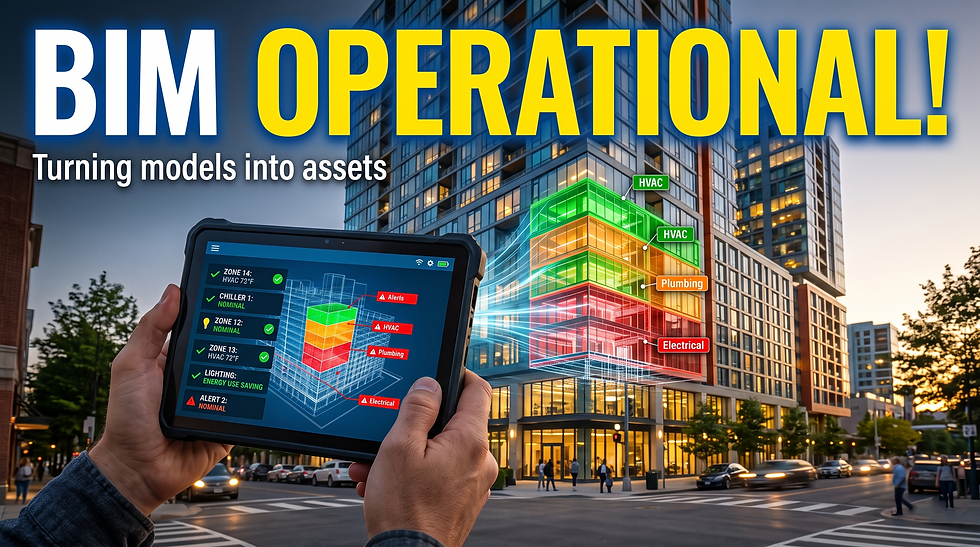
Operational Sustainability with BIM: Benefits after Construction
Once the building gets completed, the as-built BIM model continues to deliver value. It supported:
✔ Predictive maintenance
Sensors integrated into BIM help identify equipment failures before they occur.
✔ Space utilization optimization
The facility managers use BIM data for adjusting space planning with respect to occupant well-being and productivity.
✔ Energy monitoring
Actual consumption data is compared with BIM-based predictions for continuous optimization.
✔ Air quality Monitoring
Indoor environmental quality is significantly enhanced with BIM-based monitoring.
These lifecycle benefits extend the impact far beyond construction.
Why BIM Is Important for Sustainable Building Design
Summary of benefits:
Allows early energy analysis
Enhances daylight and solar optimization
Enhances HVAC efficiency
Reduction in waste and embodied carbon
Streamlines the LEED documentation process
Supports long-term operational efficiency
Improves environmental and economic outcomes
With greener, more efficient buildings being called for around the world, BIM for sustainable design has evolved from an option to a necessity.

Conclusion
As there have been rising demands on sustainability issues, BIM has become a promising method for creating intelligent, eco-friendly, and more resource-optimized buildings. Regarding this issue, BIM uses performance analysis and automation tools, and as a result, it helps plan and construct eco-friendly buildings.
From an overview based on case studies, it will become clear that BIM for sustainable design and eco-friendly architecture will not only be an advantage but a strategy for the future.
Have a project in mind? Contact us today and let’s build a better world together!



Comments